


Is your oven still giving off a stale, acrid whiff even after you wipe it down, and does that odour creep into tonight’s dinner? Lingering smells usually come from burnt spills, baked-on grease, or hidden moisture that heat reactivates during preheat. Effective oven smell removal tackles these sources at their root, restores a neutral oven interior, and keeps aromas from returning.
If you are tired of that bad aroma, want food to taste like itself again, and prefer fixes that save time across the year, then this guide explains the causes, shows why quick wipes seldom work, compares home methods with a deep cleaning solution, and shares habits that make oven smell removal last.
Table of Contents
• Causes Of Lingering Smells You Can Actually Solve
• Why Surface Wiping Does Not Remove Embedded Odour
• The Science Of Smell And Heat-Activated Residue
• Home Remedies Vs Professional Odour Removal
• When Persistent Smells Point To A Deeper Issue
• Long-Term Habits For A Fresh Smelling Oven
• FAQ
Causes Of Lingering Smells You Can Actually Solve


Smell problems come from a handful of familiar sources. Once you match the odour to a cause, you can choose the right fix and stop it from returning.
Odours from burnt fat and sugary spills rise when old residue reheats. Grease that turned sticky in summer sets hard in corners and on the base. Moist crumbs under the lower panel can feed a faint musty note. In humid weather, tiny pockets of moisture can support surface mould on removable parts if they were stored damp. All of these can drive a stubborn, bad oven odour that simple wipes do not touch.
A neutral oven interior removes these background smells. That is the core aim of any sensible oven smell removal plan.
Quick Clues That Reveal The Source
Sharp, bitter odour at moderate temperatures points to oxidised grease. Sweet, burnt caramel notes suggest sugar spills from pies or marinades. A damp, stale scent hints at moisture trapped under trays or behind removable covers. Use these clues to target the right areas first.
Hidden Places Where Smell Hangs On
Check the lip just inside the door, the lower corners, the underside of element guards, the fan cover, and between rack runners. These spots collect thin films that react to heat and keep smells circulating.
Why Surface Wiping Does Not Remove Embedded Odour
Odour lives below the smear you can see. Thin films bond to enamel, settle on fan covers, and collect in seams. When you wipe only the flat, reachable areas, residue remains in the texture, around screws, and under edges. Heat wakes it up, and the odour returns.
To succeed with oven smell removal, you must soften, lift, and remove the film, not just push it around. That means time for product contact, gentle agitation, and proper rinsing and drying. It also means treating racks, trays, and door glass so the smell does not sneak back on the next preheat.
Why Drying Matters As Much As Cleaning
Leaving parts damp invites a stale note the first time you heat up. After rinsing, dry thoroughly with a soft cloth and let the parts air dry before reassembly. This simple habit cuts repeated odours and makes any deep cleaning solution more effective.
The Science Of Smell And Heat-Activated Residue
Heat releases volatile compounds from grease and burnt sugars. Those compounds travel with airflow and cling to new food. In a clean oven interior, metal reflects heat and smells remain neutral. When residue coats surfaces, the chemistry changes. Oils break down into smaller, harsher molecules. Sugars caramelise further and then char. Both processes create strong smells that reappear with every preheat.
This is why thorough oven smell removal focuses on removing fuel for those reactions. Clear away the film, and the smell has nothing to ride on.
Why Odour Seems Worse After High Heat
Self-cleaning or very hot roasts can intensify smells temporarily because they drive off more volatiles. If sticky residue remains, the effect lingers. Once you remove the film, high heat no longer causes that harsh wave of odour.
Airflow’s Role In Spreading Smell
If the fan cover or the area around it is greasy, the fan distributes odour across the shelves. Cleaning near airflow paths dramatically reduces perceived smell, which is why this zone deserves extra care in any deep cleaning solution or professional visit.
Home Remedies Vs Professional Odour Removal
Home methods are excellent for light to moderate film. A professional service wins against heavy, heat-hardened residue that defeats patience. Choose based on build-up and your available time.
Reliable Home Routine for Oven Smell Removal
- Switch off and let the oven cool completely. Remove racks and trays.
- Soak racks and trays in hot water with a little washing-up liquid for 20 to 40 minutes.
- Wipe loose crumbs from the oven interior.
- Spread a thin paste of bicarbonate of soda and warm water on greasy areas. Leave it for a few hours or overnight for tough spots.
- Wipe with a damp cloth, refresh the paste on stubborn patches, and repeat lightly.
- Treat the inner glass with white vinegar, wait a few minutes, then polish with microfibre.
- Rinse cloths often and finish the whole interior with a clean, damp wipe.
- Dry thoroughly, including edges and corners, before heating again.
This sequence reduces bad oven odour without scratching. It removes the fuel that keeps odour returning and supports a neutral environment for everyday cooking.
When A Professional Deep Clean Is The Better Choice
Choose a technician if smoke or a harsh smell appears at normal temperatures, if odour returns within days of careful work, or if residue clings behind panels and around the fan cover. A professional deep cleaning solution strips heavy carbon, clears airflow paths, removes films you cannot safely reach, and dries everything correctly. The result is immediate and long-lasting, especially for busy households.
When Persistent Smells Point To A Deeper Issue
Not every odour is just old grease. Treat repeated smells as a signal to look closer, especially if cleaning makes little difference.
An electrical hot smell can indicate wiring insulation under stress. A sharp, metallic note could suggest a failing element. A sour, damp scent after careful drying may point to moisture trapped under a panel or a spill that seeped into insulation. In these cases, stop using high heat and book an inspection. Continued use can worsen damage and will not solve the oven smell removal.
Simple Checks Before You Call For Help
Confirm racks and trays are fully dry. Inspect door seals for stickiness and wipe them gently. Make sure oversized liners are not blocking airflow. If these checks do not help, you are likely looking at a problem beyond cleaning.
Safety First
If the smell is electrical or if you see smoke that is not linked to visible residue, switch off and arrange a service visit. Odour is one of the earliest warnings that parts need attention.
Long-Term Habits For A Fresh Smelling Oven
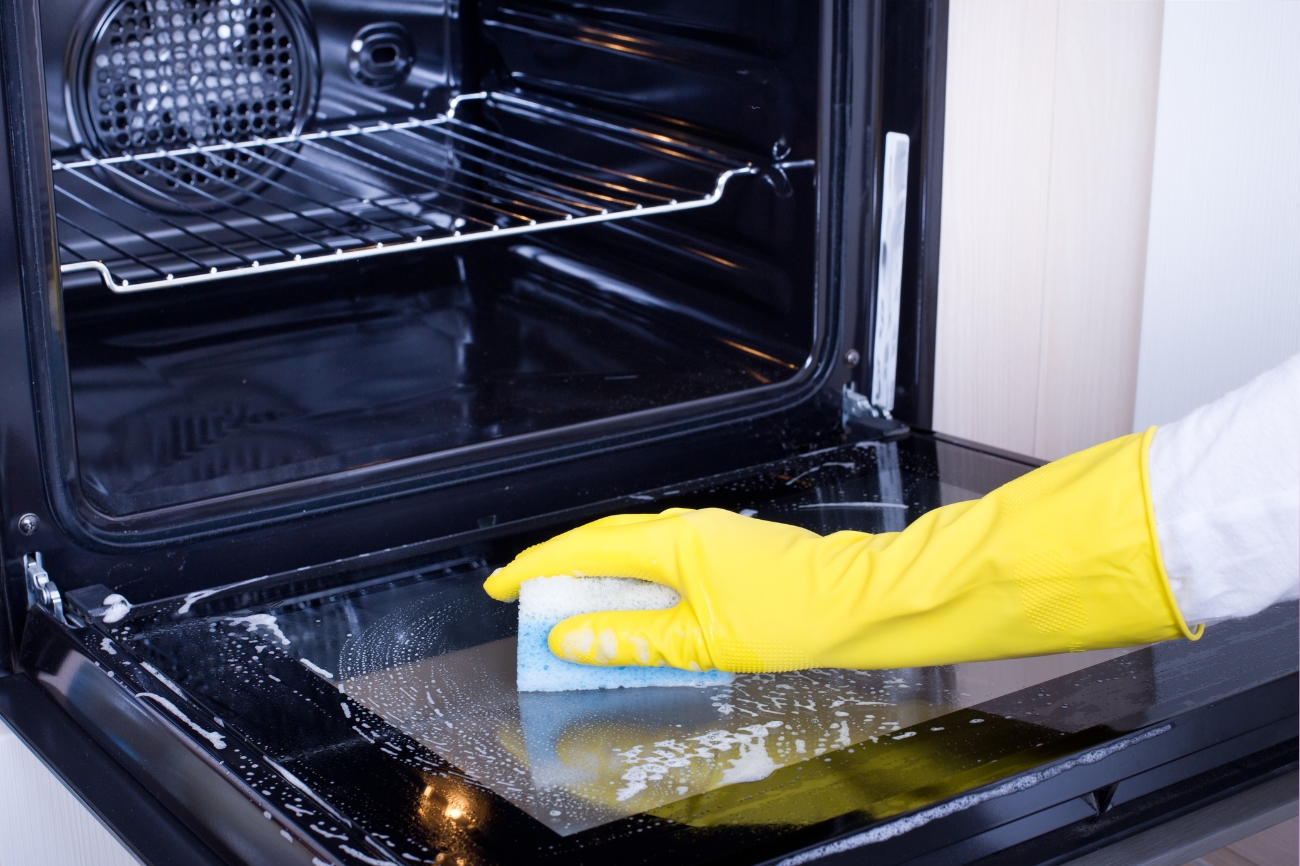
Consistency beats hard scrubbing. Small habits stop food from building up and make any future oven smell removal quick and effective.
Wipe the base after messy cooks once it is cool. Line trays for fatty roasts and place a catch tray under bubbly dishes. Soak racks after big family meals so grease does not set hard. Keep the inner glass clear with short, regular passes. Leave the door ajar for a few minutes after the oven cools to let residual moisture escape. These steps support a neutral oven interior and reduce the need for strong products.
A Simple Monthly Reset
Set aside half an hour once a month. Refresh the interior with a light bicarbonate paste where needed, wipe, and dry. Check door seals, polish the glass, and run a short warm cycle to confirm no odour remains. This rhythm, paired with quick wipes after spills, keeps bad oven odour from returning.
Store Clean, Stay Fresh
Do not reinsert damp trays or racks. Let them dry completely on a rack outside the oven. Moist metal can carry a faint stale scent into the next preheat.
Ready to enjoy a kitchen that smells clean the moment you turn the dial and food that tastes like itself again? Book professional oven smell removal today for a full deep cleaning solution that clears stubborn residue, then keep it fresh with the simple habits above for a year-round neutral oven.
Continue your journey by reading “How to Keep Odours at Bay When Using Your Oven Less in June“.
FAQ
Why does the smell return after I wipe the oven?
Wiping only the surface leaves bonded films in seams and corners. Heat reactivates them. Give products time to work, lift the film, rinse properly, and dry fully to achieve lasting oven smell removal.
Are home remedies enough for heavy buildup and strong odour?
They help, but thick carbon and grease behind covers often need a professional deep cleaning solution. Once reset, light home care keeps smells away longer.
Could a persistent odour mean a fault, not just dirt?
Yes. Electrical or metallic smells can signal component issues. If careful cleaning does not help, stop using high heat and book a service. This protects the appliance and avoids masking a real problem while you chase oven smell removal.
#OvenSmellRemoval #OvenCleaningTips #DeepCleaningSolution #BadOvenOdour #KitchenCleaning #OdourRemoval #CleanOven #HomeCleaning #FreshKitchen #ApplianceCare